
How durable are PEB structures in different weather conditions?
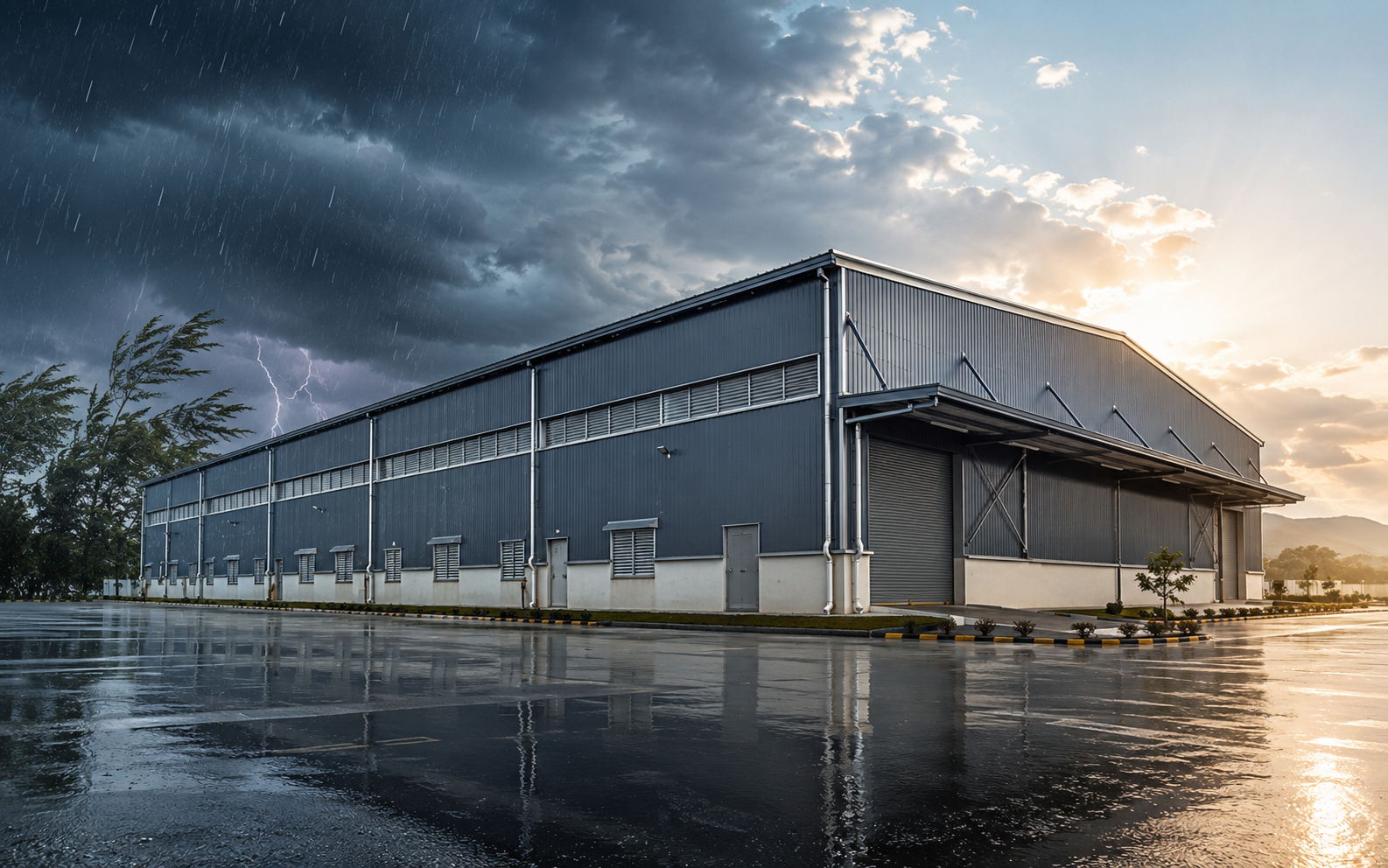
In short:
PEB structures are engineered to withstand heavy rain, high winds, and temperature fluctuations through galvanized steel components, precise structural calculations, and weather-resistant roofing systems. Sai Magaram PEB designs structures suited to Tamil Nadu’s climate conditions, including monsoon rainfall and seasonal heat, ensuring long-term durability with minimal maintenance. When properly engineered and installed, PEB buildings perform reliably across a wide range of weather challenges.
Introduction
Business owners investing in industrial or commercial buildings often worry about how well a structure will hold up against monsoon rains, strong winds, or years of heat exposure. This concern is valid, since weather-related damage can lead to costly repairs and operational disruptions.
Sai Magaram PEB has built structures across Vellore and surrounding regions, where seasonal rainfall and heat are constant considerations in construction planning. Understanding how PEB structures are engineered to handle these conditions helps clients make informed decisions about long-term building performance.
This guide explains what makes PEB structures durable in various weather conditions, the engineering factors involved, and why proper design matters for long-term structural reliability.
What Makes PEB Structures Weather-Resistant?
PEB durability against weather conditions comes down to several engineering and material factors working together. The steel components used in PEB construction are typically treated with protective coatings that resist corrosion from moisture exposure, a critical factor in regions with heavy monsoon rainfall.
Structural calculations account for wind loads specific to the building’s location, ensuring the frame and roofing system can withstand high wind pressure without structural failure. This is particularly important for buildings with large clear spans, where wind resistance design becomes more complex.
Roofing and cladding systems are also engineered with proper slope and drainage to handle heavy rainfall efficiently, preventing water pooling or leakage that could compromise the structure over time. Thermal performance considerations, including insulation options, help buildings manage temperature fluctuations without stressing structural components.
Together, these engineering choices determine how well a PEB structure performs not just when new, but over years of exposure to regional weather patterns.
How PEB Building Selection Works
- 1.Site-Specific Wind Load Analysis - Engineers calculate wind resistance requirements based on the building's specific location and regional weather data.
- 2.Corrosion-Resistant Steel Selection - Galvanized or coated steel components are selected to resist rust and corrosion from moisture exposure.
- 3. Roof Pitch and Drainage Design - Roofing systems are designed with appropriate slope and drainage to handle heavy rainfall without pooling.
- 4. Structural Load Calculations - Overall structural strength is calculated to withstand combined loads from wind, rain, and the building's own weight.
- 5.Cladding and Sealant Application - Weather-resistant cladding and proper sealing prevent water infiltration at joints and seams.
- 6.Insulation and Thermal Planning - Insulation options are incorporated to manage temperature fluctuations and reduce thermal stress on materials.
- 7. Quality Fabrication Standards - Components are manufactured to precise specifications, ensuring consistent quality that supports long-term durability.
- 8. Proper On-Site Installation - Correct assembly and installation practices ensure the structure performs as engineered once completed.
Your Trusted Partner for PEB Manufacturers in Tamil Nadu
We are leading PEB Manufacturers in Tamil Nadu, which are designed to revolutionize the construction industry.
🏗️ Build Smart. Build Strong. Build with PEB Steel.
Key Factors Affecting PEB Weather Durability
Corrosion Protection — Galvanized coatings and protective treatments prevent rust from moisture and humidity exposure over time.
Wind Resistance Design — Structural calculations specific to regional wind conditions ensure the frame withstands high wind pressure.
Rainwater Drainage — Properly engineered roof slopes and drainage systems prevent water pooling and potential leakage.
Thermal Performance — Insulation options help manage temperature fluctuations, reducing stress on structural materials over time.
Material Quality — High-quality steel components directly affect how well a structure resists weather-related wear over decades.
Installation Precision — Correct on-site assembly ensures the structure performs according to its engineered specifications.
Why This Matters for Buildings in Tamil Nadu
Tamil Nadu’s climate presents specific challenges for industrial and commercial structures, including monsoon season rainfall and extended periods of heat. Buildings in Vellore and surrounding areas need to withstand these seasonal patterns without compromising structural integrity.
Monsoon rainfall in particular tests a building’s drainage and corrosion protection systems, since prolonged moisture exposure can accelerate wear if these systems aren’t properly engineered. Structures designed with regional climate data in mind tend to perform more reliably over their operational lifespan.
Working with a PEB provider familiar with local weather patterns helps ensure the structural design accounts for these regional factors from the outset, rather than requiring costly modifications after weather-related issues arise.
Sai Magaram PEB's Approach to Weather-Resistant Construction
Sai Magaram PEB designs structures with weather durability as a core engineering consideration, particularly relevant for Tamil Nadu’s climate conditions.
Pre-Engineered Steel Buildings — Designed with corrosion protection and structural calculations suited to regional weather patterns. Learn more about pre-engineered steel buildings.
Heavy Steel Structures — Built for large-scale facilities requiring high load capacity and long-term durability. Check heavy steel structures.
Conventional Steel Structures — Traditional structural design combined with steel strength for weather-resistant performance. Explore conventional steel structures.
For structures already in use, running plant maintenance services help maintain weather resistance and structural integrity over time.
Why Choose Sai Magaram PEB
Regional Climate Expertise — Understanding of Tamil Nadu’s weather patterns informs structural design decisions from the start.
Quality-Focused Fabrication — Precision manufacturing ensures components meet durability standards before reaching the site.
Comprehensive Structural Range — Experience across various PEB structure types allows tailored solutions for different durability needs.
Ongoing Maintenance Support — Running plant maintenance services help extend structural lifespan after installation.
Proven Local Track Record — Experience building structures across Vellore that withstand regional weather conditions.
If you’re planning a PEB project and want to ensure long-term weather durability, visit the Sai Magaram PEB homepage or contact the team to discuss your requirements.
Conclusion
PEB structures are engineered to withstand a range of weather conditions through corrosion-resistant materials, precise wind load calculations, and proper drainage design. For regions like Tamil Nadu with monsoon rainfall and seasonal heat, this engineering approach ensures long-term durability with minimal maintenance requirements.
Sai Magaram PEB brings regional climate expertise and quality-focused fabrication to every project. Get in touch with Sai Magaram PEB to discuss weather-resistant PEB solutions for your building needs.
Frequently Asked Questions (FAQ)
PEB structures are engineered with corrosion-resistant steel, wind load calculations, and proper drainage systems to withstand heavy rain, high winds, and temperature fluctuations reliably.
Yes, PEB structures are designed with roof slope and drainage systems specifically engineered to handle heavy rainfall without pooling or leakage.
Regular maintenance helps extend durability, though quality corrosion protection significantly reduces the frequency of weather-related upkeep needs.
Engineers calculate wind load requirements based on the building’s specific location and regional wind data before finalizing structural design.
Proper insulation and thermal planning help manage temperature-related stress on materials, supporting long-term structural stability.
Trusted PEB Structures
for Every Industry
Contact us today for expert solutions and a customized quote.